
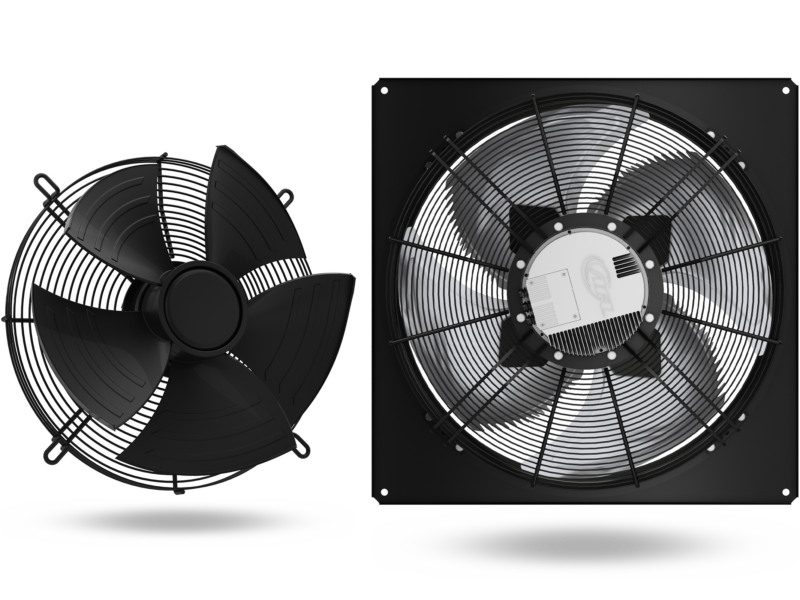
A coil quotation can leave the OEM owning fan selection, mounting, controls and the final airflow test. Before comparing it with a fan-equipped offer, make that work visible. Start with the equipment air path, choose a candidate fan family, and write down exactly which assembly each supplier will deliver. AFL’s EC axial family and its bare-versus-framed AHU examples show how product selection changes the purchasing scope.
Why should the product-line distinction trigger a scope check?
In its February 26, 2026 announcement, LUVE describes its Cooling product line as ventilated and its Components product line as static. That distinction is a useful starting point when routing an inquiry. The announcement supplies no itemised scope for a particular quotation. Request the actual configuration before assigning responsibility for the fans or controls.
For an OEM buying a coil for integration into its own equipment, the next question is who owns the air-side selection and assembly. For a buyer requesting a ventilated package, ask which controls, accessories and tests are included in that package.
Where does AFL fit in the equipment design?
AFL’s EC axial family is a starting point for evaluating an outdoor heat-pump air path. The local product record calls for airflow, coil and equipment resistance, installation space and electrical requirements. Send the layout and required duty before selecting a model. For ducted or enclosed equipment, evaluate a suitable centrifugal configuration against its curve and installation drawing. Fan type is an initial screening choice; the documented duty and installation determine the candidate.
Outdoor coil with a short air path
Include the coil face arrangement, grille, shroud or surrounding panels and the intended flow direction. Ask the equipment engineer for the resistance the fan must overcome at the target airflow. Review candidate axial fan curves and physical clearances against that condition, including any project-specific sound requirements.
Ducted or higher-resistance air path
Describe the duct connections, filters, heat exchanger and other restrictions in the selected operating condition. Ask for the flow and pressure pair at each required mode. A centrifugal proposal needs the same integration checks for inlet space, mounting, service access and controls.
Which items should appear on the same comparison sheet?
Use a separate line for the coil, fan and motor, mounting or guarding components, controller, sensors, wiring, and assembly or testing work. For each line, record the supplier, item identifier, inclusion status and relevant drawing or document revision. Mark an unresolved line for clarification before evaluating the total price.
Air-side integration
Ask who selects the fan for the coil and equipment resistance, and who approves its mounting and air path. Request the operating conditions used in the proposal and the evidence the responsible engineer will use to accept that selection.
Controls and electrical work
Identify who supplies the control hardware, defines the interface, prepares the wiring information and verifies operation after assembly. Have each party state what it needs from the other supplier and when those details must be fixed.
What can an AFL bare-versus-framed example teach the buyer?
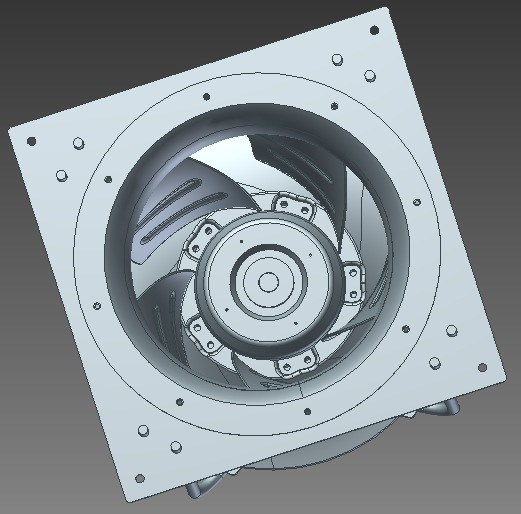
Slide 25 of AFL’s equipment-selection presentation labels B3P400-EC188-031 as a bare fan and -032 as a version with a frame. This is an AHU product example of a supply-boundary decision. The extra frame changes what must be identified in the delivered assembly and installation drawing.
If the OEM selects a bare version, assign responsibility for its mounting structure and integration. If a framed version is proposed, request the frame dimensions, mounting points and scope drawing so engineering can check the actual enclosure. The “with frame” description establishes a stated variant; guards, isolation components, control hardware and installation services each still need their own inclusion line. Apply this method to the selected heat-exchanger equipment rather than assuming either AHU model fits a particular condenser.
Which picture should accompany the quotation?
Use the supplier’s actual configuration photograph or drawing, labelled with the exact model and variant. Keep the scope list beside it. If the available image illustrates a family or a mixed comparison slide, label that scope and obtain a configuration-specific drawing before approval.
How should purchasing compare two prices with different boundaries?
Hypothetical example: Quote A covers a coil and its drawing. Quote B includes a coil, fans and assembly, while its controller is an option. Build a completed-equipment cost comparison by adding the remaining required items and integration work to each offer. Request prices or estimates from the responsible parties and identify unresolved amounts. The comparison can then show both the quoted price and the work still owned by the OEM.
Delivery planning needs the same treatment. Record when the coil drawing, fan selection and controls interface must be approved for the intended assembly date. A component delivery date is only one dependency in that plan.
What evidence should follow the assembled equipment?
Ask the responsible engineer to define the duty and acceptance conditions for the assembled unit, then specify which party supplies each supporting document or test result. Keep component specifications identifiable within the file. Record changes to the selected fan, coil or control arrangement so the engineer can decide whether the accepted evidence still applies.
For a fan supplied separately, give AFL the equipment layout, relevant air-side duty and integration responsibilities. The buyer’s scope sheet should state who approves the complete equipment; that decision belongs in the project agreement.
What should be confirmed before releasing the purchase order?
Attach the agreed scope comparison, itemised quotation and drawing revisions. Name the owner of every optional or buyer-supplied item, the acceptance documents required, the approval milestones and the contact for interface questions. Ask both parties to acknowledge any exclusions that affect installation or commissioning.
A practical RFQ request is: “Please identify the fan, control and assembly items included in this configuration, state the items we must supply, and list the information you need before confirming the completed equipment duty.”
To approach AFL, send one equipment section drawing, the coil/air-path pressure requirement at target airflow, intended supply and control signal, permitted installation dimensions and a marked scope list. Ask for a candidate model, its curve and drawing, and explicit inclusions or exclusions. This gives purchasing a comparable fan proposal and gives engineering a defined assembly to evaluate.
| Item | Coil-only route: assign an owner | Fan-equipped route: confirm inclusion |
|---|---|---|
| Fan selection | Supplier/engineer responsible for curve review | Exact model, duty and configuration |
| Mounting | Structure, clearances and equipment connection | Frame and supplied fittings on drawing |
| Controls | Controller, sensors and interface owner | Included controller and optional functions |
| Evidence | Component records and assembled-unit acceptance owner | Conditions behind the package performance claim |
| Delivery | Component approval and assembly milestones | Options and information required before release |
Buyer FAQ
Does “ventilated” mean the controls are included?
Check the quotation’s itemised configuration. A product description may identify a ventilated range while the offered controller or sensors remain options. Ask the supplier to list the controls and their functions against the specific offer.
Can a static coil inquiry still lead to a separate fan purchase?
Yes, when the intended equipment needs a fan and the OEM or another supplier owns that scope. Confirm the equipment design and purchasing responsibilities first, then prepare a fan inquiry with the required air-side duty and installation information.
Can both suppliers use the same headline capacity for comparison?
Ask engineering to align the conditions behind each capacity claim, including the relevant air-side and fluid-side assumptions. Retain those conditions with the offers. Purchasing can compare the capacity evidence once the responsible engineer confirms that basis.
Who handles a problem discovered after assembly?
Agree the initial investigation contact and each party’s review responsibilities in the scope documents. Keep the supplied configuration and acceptance records available. Any warranty or remedial obligation must be taken from the applicable contract terms.
Does the LUVE announcement identify an opportunity to supply AFL fans?
The announcement identifies two product lines and their commercial organisation. Establish the specific equipment, internal selection responsibility and supplier-entry process before treating an organisation as a prospect for external fan supply.
Does choosing a framed fan remove all OEM integration work?
Read the frame scope and drawing alongside the equipment layout. The OEM still needs assigned responsibility for mounting to the enclosure, the airflow interface, electrical connection and final acceptance. Ask which of those tasks or components the offered package includes, and name the owner of the remaining work.
Sources
Related documents and engineering decisions
EC axial fans B3P400-EC188-031 B3P400-EC188-032 EC axial fan catalogue AFL bare and framed AHU variants · slide 25Related products
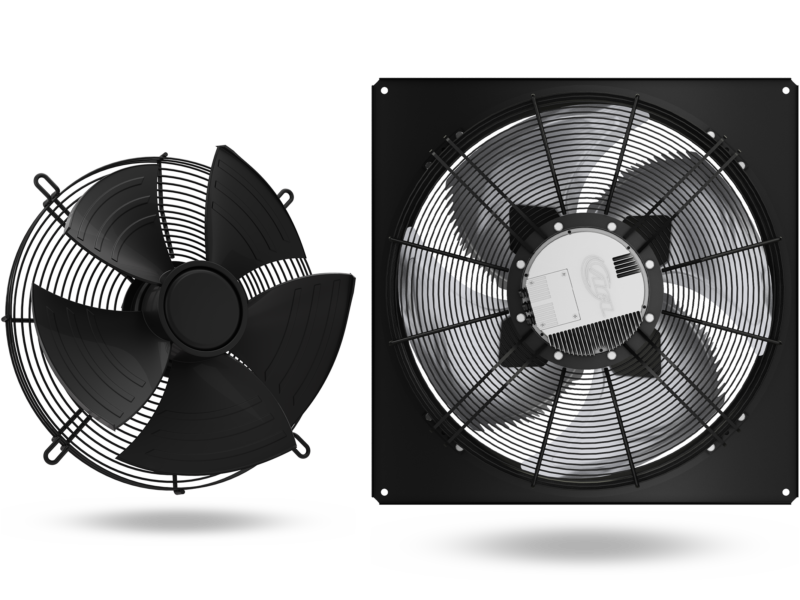 AFL product family illustration · axial fan. Individual mounting and accessories vary by suffix.EC axial fansEC axial fans for heat-pump equipment. Compare model curves, mounting drawings and control interfaces against your coil and airflow requirements.
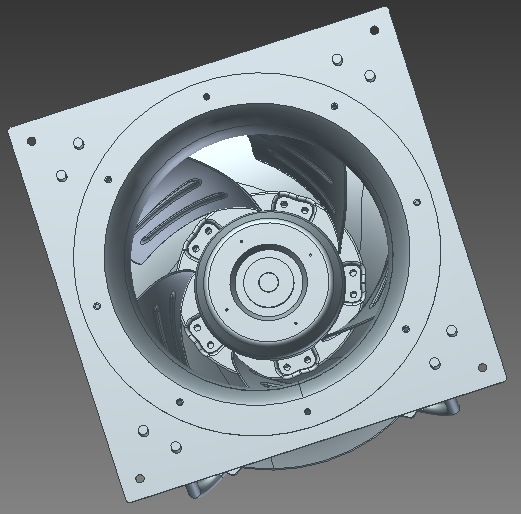 Framed B400 configuration · AFL equipment presentation, slide 25.B3P400-EC188-031B3P400-EC188-031: review air-handling unit fan specifications, mounting requirements and technical sources before selecting a fan for your equipment.Framed B400 configuration · AFL equipment presentation, slide 25.B3P400-EC188-032B3P400-EC188-032: review air-handling unit fan specifications, mounting requirements and technical sources before selecting a fan for your equipment.